
What’s sparking electric vehicle adoption in Southeast Asia?
:format(webp)/f/149518/1920x1080/04c8cb84c1/what-s-sparking-electric-vehicle-adoption-in-southeast-asia_.png)
By TAM Hock Chuan
There’s nothing new about Electric Vehicles (EVs), for they have been tearing up the streets since 2006, with Tesla leading the charge [1]. In fact, a walk down memory lane reveals electric cars have been around for almost 200 years, predating petrol cars [2].
So, what changed? What is driving this EV wave?
From automakers’ interest to supportive government policies and growing consumer acceptance, we take a look at the key drivers leading the EV revolution.
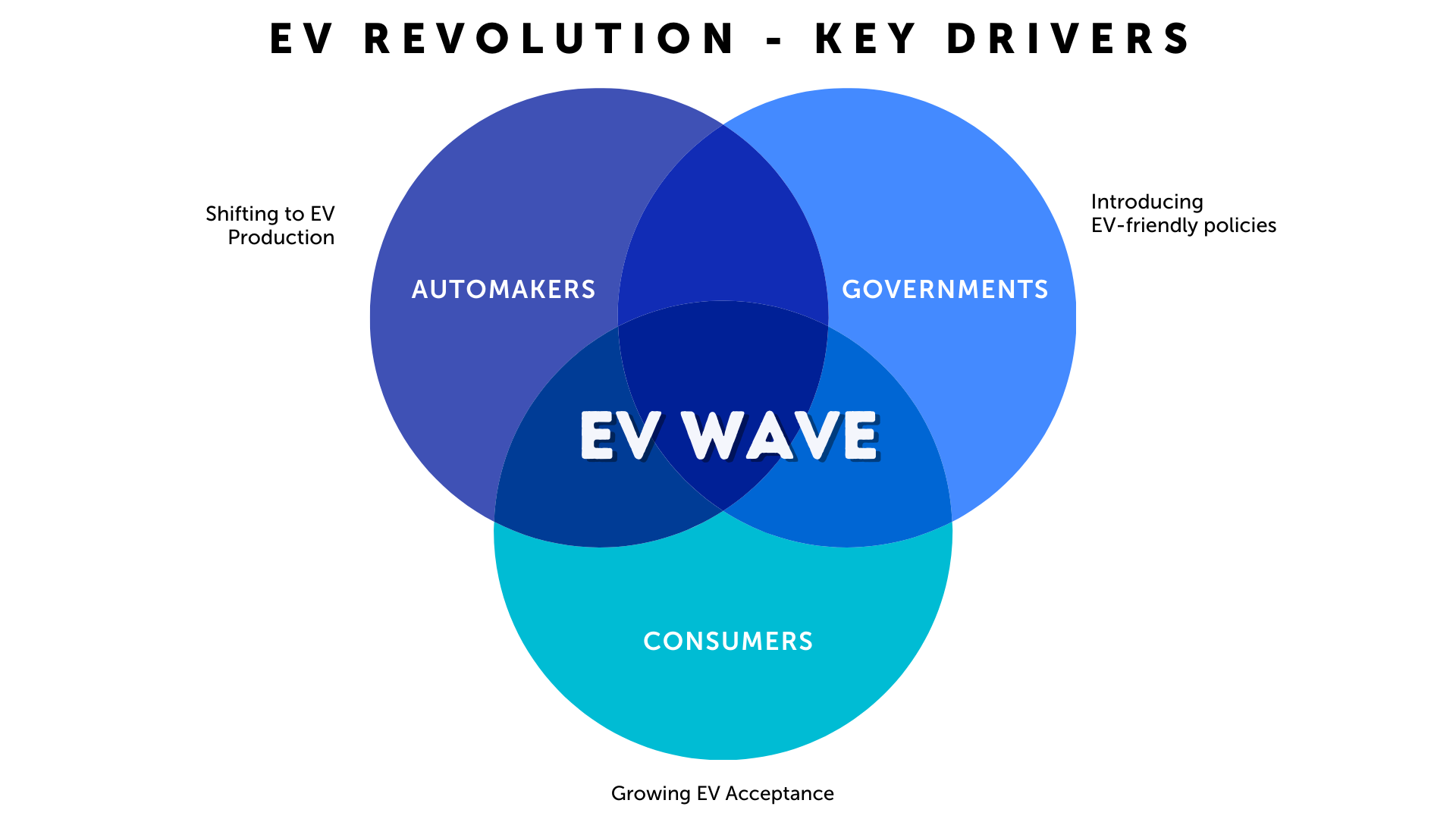
Automakers: Shifting gears to EV production
For years, we have been hearing about the advent of electric cars. Today, evidence is mounting that the era has arrived with automakers introducing new EV models in recent times. Among EV manufacturers, Tesla sets itself apart as the market leader with its speed in innovation and initiation of the going green trend. As a trailblazer in the EV space, Tesla materialized the Sci-fi dream of creating edgy tech vehicles that support sustainability and environmental initiatives.
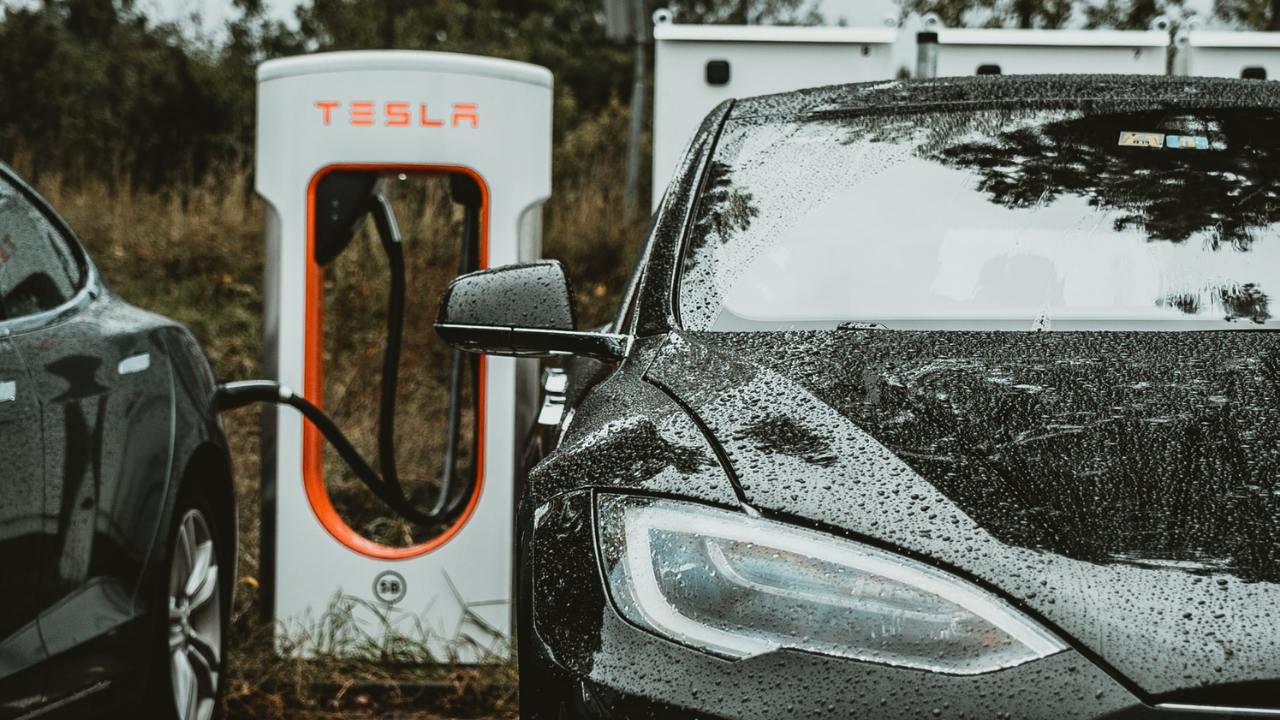
Source: Tesla charging points from Unsplash
While Tesla’s EVs captured popular attention in North America, China rolled out its national strategy to develop new energy vehicles . With a strong government push, China’s EV industry grew tremendously and became the world’s largest marketplace for electric cars today [3]. BYD, SAIC Motor, NIO, Li Auto and many more have joined the domestic EV industry, and set their sights on being a global EV player [4].
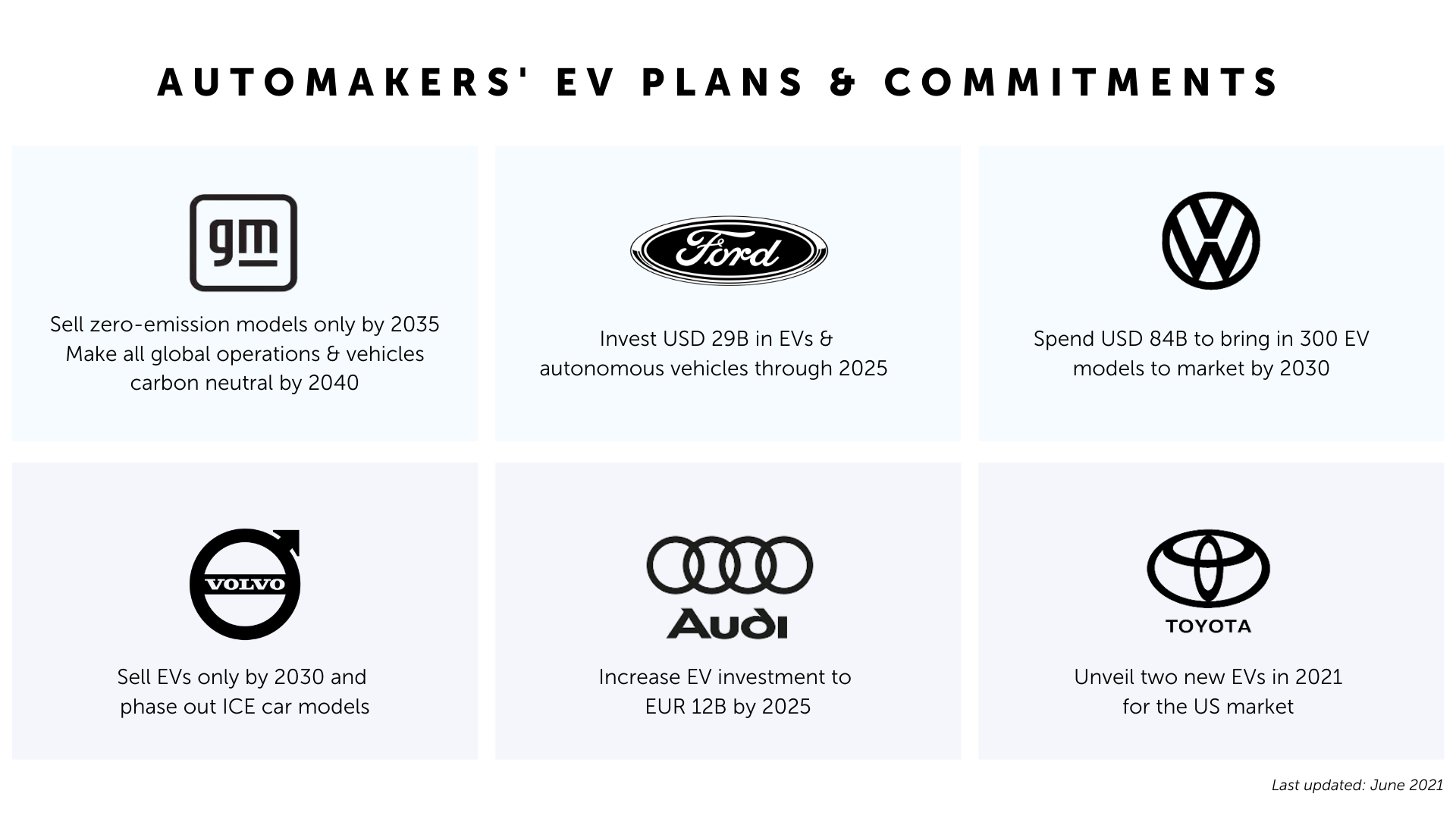
Major automotive OEMs in US, Japan and Europe have also jumped on the EV bandwagon and are making significant commitments towards EV production. The figure below summarizes the EV plans and commitments from global automakers [5 to 10].
Home to the fifth largest automotive market in the world, Southeast Asia (SEA) is poised to reap the benefits of major OEMs’ investments in the region’s vehicle electrification [11]. Indonesia recently signed a USD 9.8B MOU with South Korea’s LG Group to produce lithium batteries for EVs, and hinted at potential agreements with Tesla to develop their EV and battery industry [12][13]. Over in Thailand, Toyota is spending THB 19B to manufacture EVs at its Chachoengsao plant, while Nissan pledges to become an EV hub for export worldwide [14][15]. Meanwhile, Vietnam’s VinFast is planning to export electric SUVs in 2022 [16].
Governments: Paving the way with EV-friendly policies
Besides automakers’ commitments, governments in Asia have been fervently rolling out initiatives to encourage eco-friendly car purchases. For instance, by the end of 2030, Japanese carmakers are required to improve fuel efficiency by 30 percent. Meanwhile neighboring countries such as South Korea, have reduced EV prices by KRW 10M in hopes of having 2.83 million green cars on the road by 2025 [17][18].
Alongside these initiatives, governments are also playing a pivotal role in developing their nation’s EV infrastructure. An example includes densely-populated Hong Kong – an urban city with compact spaces. Despite the limited space, Hong Kong plans to have at least 5,000 public charging points by 2025 and are doubling down in the future [19]. Meanwhile, South Korea aims to set up 3,000 rapid charging stations for EVs by the end of this year. The need to establish a comprehensive EV infrastructure was echoed by South Korea’s Finance Minister, Hong Nam-ki, who emphasized that creating convenient charging infrastructure is important to keep pace with the expansion of EV supply. [20].
Singapore, a frontrunner in SEA, is leading the charge with their Singapore Green Plan 2030. The plan features initiatives encouraging consumers to switch to EVs by lowering upfront purchase fees and increasing rebates for cleaner vehicles. Other initiatives include corresponding surcharges for pollutive vehicles, as the nation targets to phase out all Internal Combustion Engine Vehicles (ICEVs) by 2040 [21]. Across the border, Malaysia has geared up to accelerate EV adoption. Malaysia Automotive, Robotics and IoT Institute (MARii) CEO, Datuk Madani Sahari, hinted a soon-to-be-announced accelerated EV policy will include direct incentives for EV purchases such as rebates on road tax, toll, parking and charging installation [22].
These policies encourage consumers’ EV adoption with similar thoughts echoed in The Future of Electric Vehicles SEA report – where survey respondents shared governments’ monetary incentives and development of EV friendly infrastructure are key factors influencing their switch to EVs [23].

Consumers: Growing EV acceptance
Consumer adoption is the final piece of the puzzle for the EV market to flourish. In 2020, global consumer spend on EVs has increased to USD 120B while Asian consumers’ interest in EVs and hybrid vehicles have risen in tandem – stemming in part from increased environmental awareness and concerns over sustainability [24].
To encourage consumers’ EV adoption in SEA, close collaboration between governments and automakers is crucial – where their joint effort goes beyond providing adequate EV supply and monetary incentives, but education and exposure. An example includes BlueSG, an EV car-sharing program launched in 2017 for Singaporeans to experience EVs and test their viability in the lion city. Back then, consumers were unfamiliar with the concept of electric cars. Today, the company is touted as the world’s second largest electric car-sharing service with a fleet of over 667 shared EVs and 1,487 charging points across 374 locations island wide [25].
Beyond growing consumer awareness, the noise-free and smoother EV driving experience has become an enticing point for car owners. Soon, the roar of an engine maybe a thing of the past as EV enthusiasts are sharing a common sentiment – once you own an EV, you are unlikely to switch back to fuel cars. According to an AAA study, over 95% of EV drivers will choose an EV as their next car. These drivers recognize the electric car’s ability to provide quick acceleration and deliver instant torque at any speed, making EVs their next car choice a no-brainer decision [26].

Joining the EV revolution
A sustainable future requires environmentally-friendly solutions. Today, EVs are becoming an essential part in the push towards sustainability, alongside complementary trends such as renewable energy and carbon emissions tracking. With the urgency to tackle climate change, EVs are here to stay.
At Vertex Growth, we partner companies that address a true market need. As EV adoption gathers momentum, new charging service providers will emerge to serve the needs of EV drivers. EV charging providers will need a scalable plug-&-play software platform that can efficiently manage, run and grow their charging business. The game-changer will lie in feature comprehensiveness, reliability and ease of use. This led to Vertex Growth’s conviction to invest in Virta, Europe’s fastest-growing EV charging service platform. As the charging infrastructure develops and the relationship between charging point operators, grid and energy suppliers increase in complexity, we further envisage the criticality of SaaS platforms like Virta, which incorporates advanced features such as dynamic load management and vehicle-to-grid capabilities.
Consumers are recognizing the advantages EVs present but are wary of making the switch without proper infrastructural support, in particular the availability of charging stations. Virta provides an end-to-end solution for service providers to launch and operate EV charging businesses with minimal hassle. Over time, service providers can further grow their business through interoperability with other charging networks to pool charge points and EVs. Virta’s experience in setting up EV charging networks across Europe makes them a trusted and experienced partner for businesses aspiring to establish and grow EV charging networks.

Join us in the Asia EV revolution!
Coming up next: Virta and the electrified future
